By running without oil, the booster safeguards oxygen purity. This design also prevents potential explosion hazards that could arise from contact between oxygen and oil.
Safety
Safety is paramount in any environment where oxygen is present at high concentrations. Oxygen enrichment significantly increases the risk of fire and explosion. Although oxygen itself is not flammable, it strongly supports combustion. Materials that are normally nonflammable can ignite easily and burn intensely in oxygen-rich atmospheres.
01. Oxygen safety
Combustible materials in oxygen enriched atmospheres
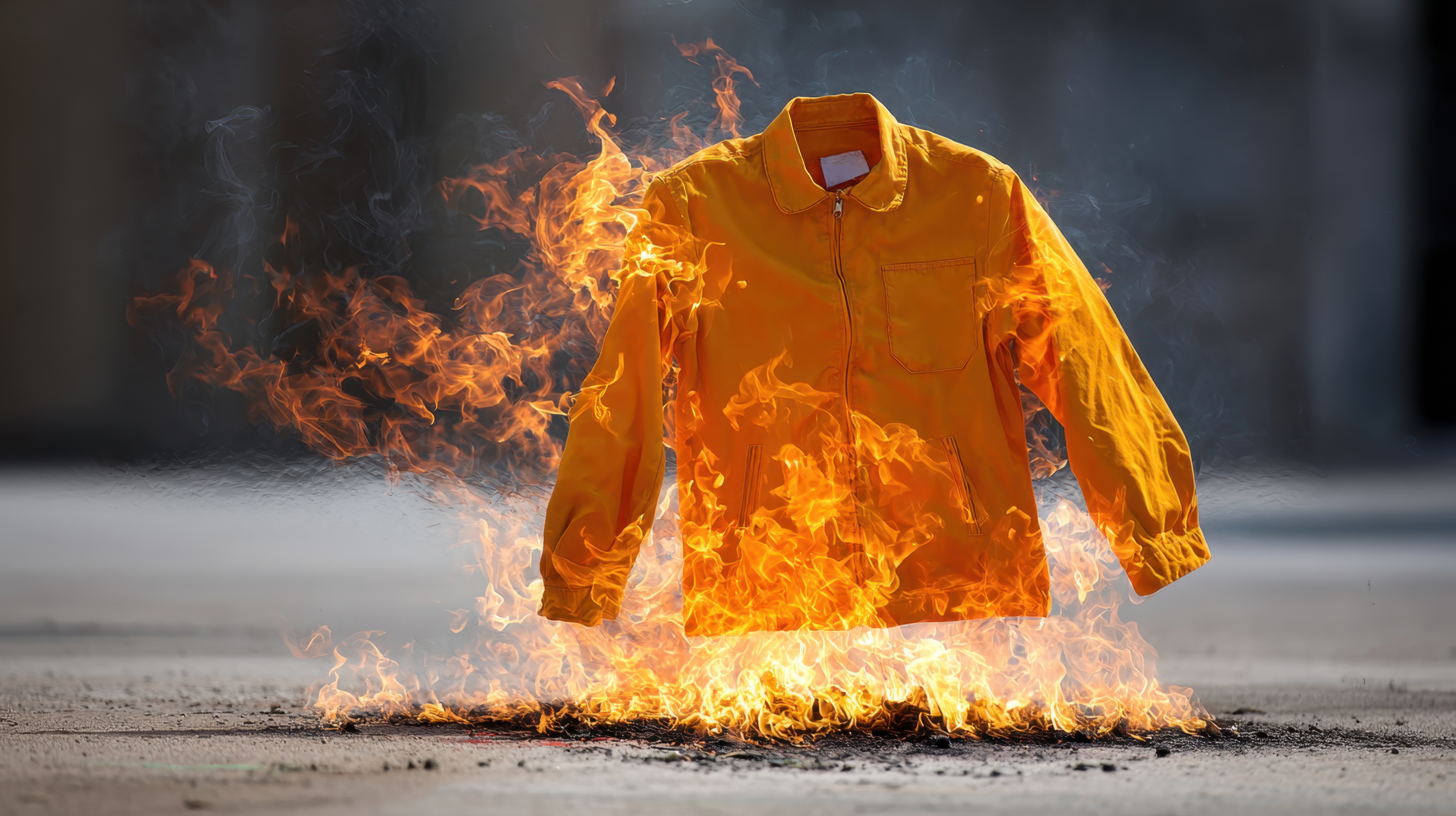
The most common combustible material that affects personnel safety is clothing.
- All clothing materials can burn fiercely in oxygen enriched atmospheres.
- Vent your clothing in a ‘normal’ atmosphere for at least 15 minutes!
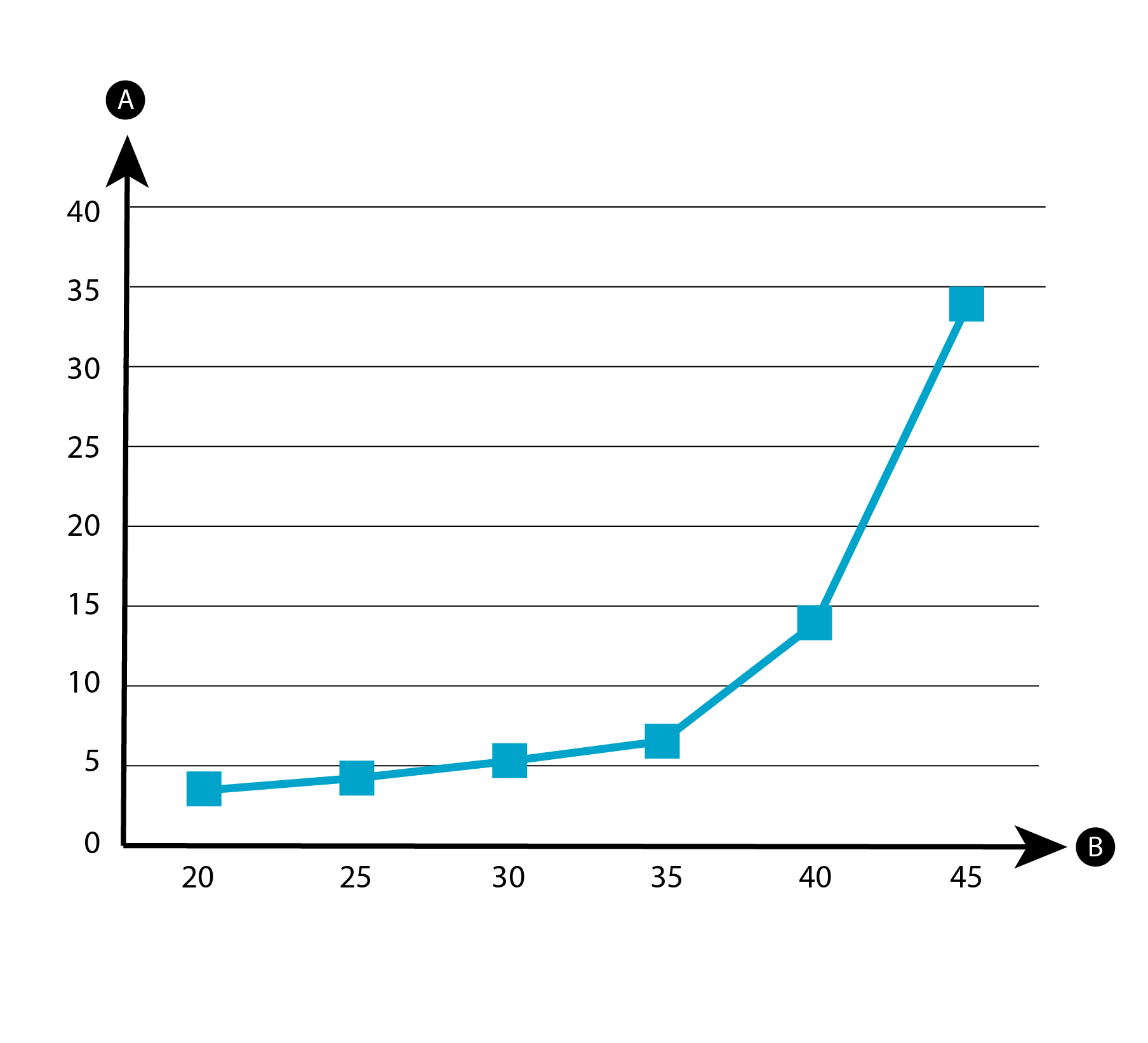
This graph illustrates how cotton behaves when exposed to higher oxygen concentrations.
A = rate of burning cotton clothing (cm/s)
B = oxygen in atmosphere (%)
| % Oxygen at sea level (atmospheric pressure) | Effects |
| > 23,5 | Increased fire hazard |
| 20,9 | Normal |
| 19,0 | Some adverse physiological effects occur, but they are unnoticeable. |
| 16,0 | Increased pulse and breathing rate. Impaired thinking and attention. Reduced coordination. |
| 14,0 | Abnormal fatigue upon exertion. Emotional upset. Faulty coordination. Poor judgment. |
| 12,5 | Very poor judgment and coordination. Impaired respiration that may cause permanent heart damage. Nausea and vomiting. |
| < 10 | Inability to perform various movements. Loss of consciousness. Convulsions. Death. |
02. Machine safety
Machine safety is a critical component of industrial operations, ensuring that equipment is operated, maintained, and monitored in a manner that prevents accidents and protects personnel. Effective machine safety starts with thoughtful design – incorporating features such as guards, emergency stop systems, interlocks, and clear labeling – to minimize human exposure to potential hazards and create a safer working environment.
|
Dry-run design
By running without oil, the booster safeguards oxygen purity. This design also prevents potential explosion hazards that could arise from contact between oxygen and oil.
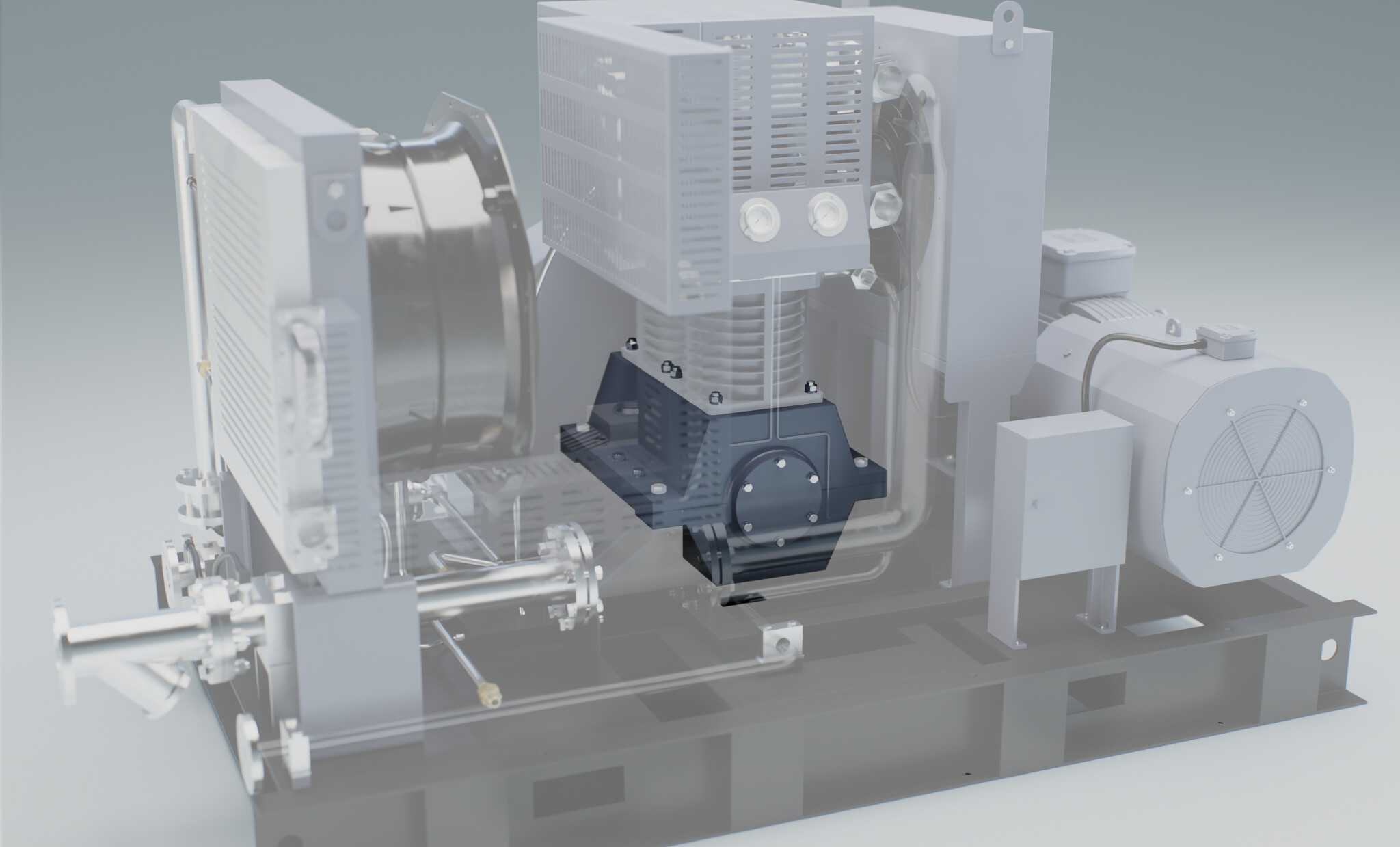
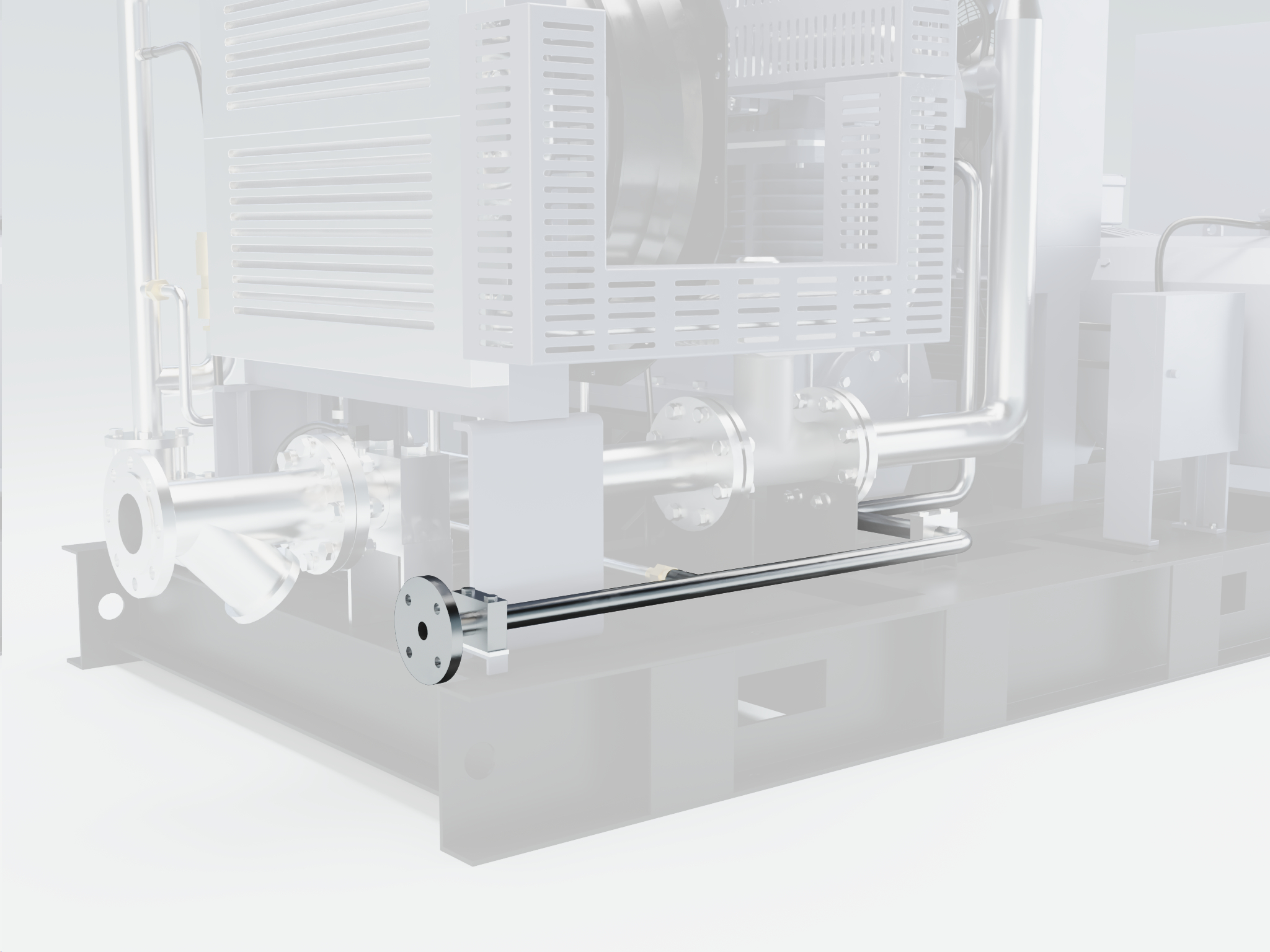
Dedicated ventilation pipe
All released or vented oxygen is safely collected through a dedicated ventilation pipe. The system can be connected outside the workspace to minimize risks.
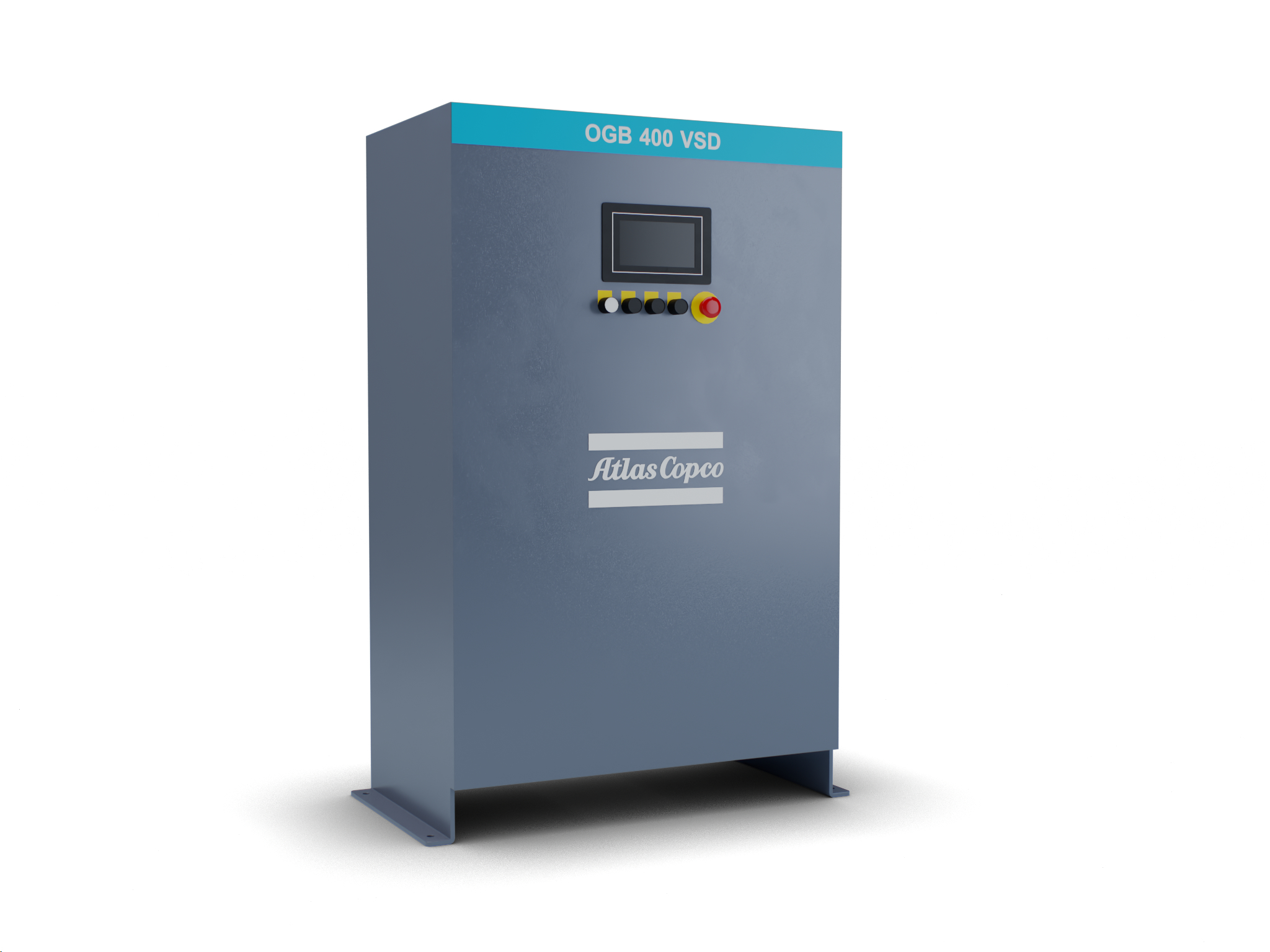
Remote control
Operate the machine effortlessly from a safe distance with our advanced Elektronikon. This remote control feature allows the operator to start, stop, and monitor key functions without being near the equipment, reducing exposure to potential hazards and improving overall safety. Ideal for challenging environments, it ensures convenience, reliability, and peace of mind during operation.
 |
03. Operation safety
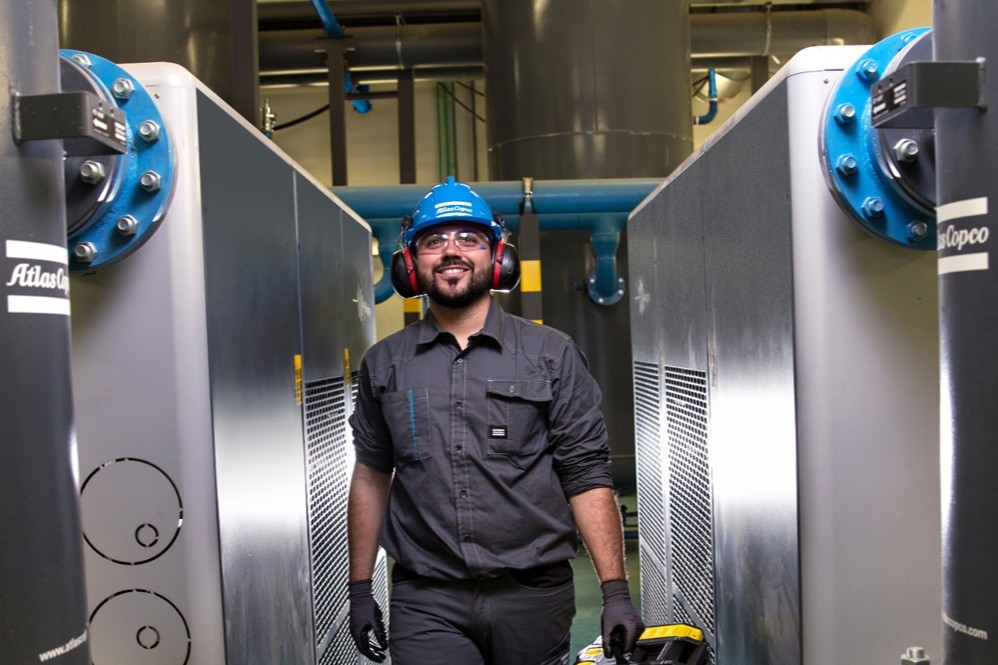
To ensure safety, all oxygen systems must be kept free from oil, grease, and other contaminants, as these substances can spontaneously ignite upon contact with high-pressure oxygen.
Installation
- Follow the installation instruction and ensure proper piping diameters to limit flow velocity
- Select appropriate equipment and materials, such as filter, piping, vessel,…

Cleanliness
- Compliance with cleanliness requirements during installation and maintenance
- The presence of oil or excessive particles can lead to an explosion in the O2 booster
- O2 Booster inlet quality 2:2:1

Monitoring
- O2 is colorless, odorless, non-toxic, non-flammable gas
- Ensure the installation aera is well ventilated
- Install O2 level monitoring system